
Nuisance Wildlife Removal
Unique Animal Removal Service is an experienced nuisance wildlife management company operating in the St Louis Metro Area. We strive for the most humane and environmentally effective techniques for handling nuisance wildlife problems, in addition to animal capture and removal.
We will work with you to provide the solutions you need at a price you can afford. We do a 50 point inspection of your home or business from chimney top to foundations. We are insured and guarantee all of our services.
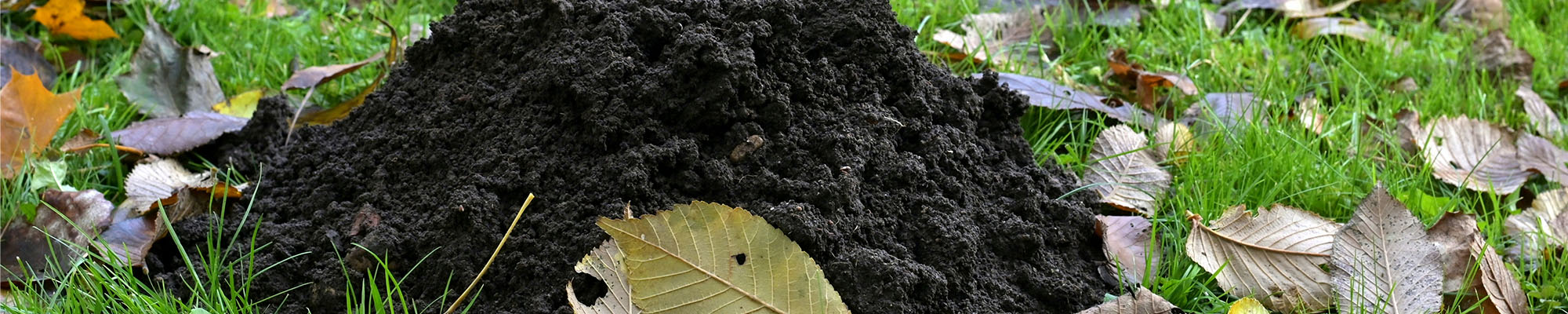
We partner with you to solve your problems and rid your property of:The primary nuisance concern is that they dig, and can damage landscaping. That's about it. They create a few different types of tunnels. The surface feeder tunnels often snake out all across a lawn. They are created when a mole digs its way through the shallow dirt in search of food: earthworms, grubs, and other small invertebrates. Because a mole has a high metabolism and is very active, it can create a lot of these surface ridges. People often complain about the appearance to the lawn, or say that the ground feels "squishy", a result of stepping on the loose, raised tunnels. Moles also create deeper holes and chambers, and will often push large piles of dirt up to the surface of the lawn, and many people find these unsightly or damaging as well.
Our treatment begins with a assessment of mole ranges and marking of runs using flags; holes are placed in all runs to see if the mole is using that tunnel regularly (moles will patch the holes if they are using the runs.) We then use bait and Traps to get your mole problem under control with an initial service regimen that includes 3 or more visits in a 1-2 week time frame.
While no force can prevent new moles from venturing onto your property, we will do whatever it takes to eliminate them once they do.
The most common nuisance bird that we deal with is pigeons. Pigeons are common in urban areas of Missouri. They like to roost on various urban structures, such as beams, ledges, and store signs. There, they poop all over the place.
These droppings may accumulate and create unsanitary conditions. If the droppings accumulate over time inside a structure, they can grow the fungus that can cause the lung infection histoplasmosis.
Raccoons are a common pest animal in Missouri. They get into all kinds of mischief. They commonly tip over garbage cans and will pry or tear open anything they find that might lead to food. They commonly steal pet food. They like water, and will often defecate in a swimming pool or remove all of the fish from an ornamental pond. They have no fear of breaking into homes through pet doors or other means. Female raccoons love to live inside of attics, where they will often bear and raise their young. They can cause considerable damage and biohazard once in an attic.
The elusive common otter has sleek brown fur, which is often paler on the underside, and a long lithe body with a thick tail and short legs. Adaptations for an aquatic lifestyle include webbed feet, the ability to close the small ears and the nose when under water, and very dense, short fur which traps a layer of air to insulate the animal.
Weasels target small prey and will leave puncture wounds on neck and head; May kill wild birds, poultry and their eggs, pocket gophers, voles and mice. Long-tailed weasel may also kill rabbits. Many poultry may be killed in one night with only heads eaten. Rodent prey may be eaten through hole made in back or side of neck. Often puncture wounds from weasel canine teeth are found at base of skull in prey. Egg Depredation Signs 1/2 to 3/4 inch hole eaten in end of egg and contents removed.
Flying squirrels are extremely small in size compared to other squirrel members, such as the gray and fox squirrels. Flying squirrels may cause damage when they enter buildings via construction gaps, dormer and louver vents, chimneys, fascia boards and soffits. Their entrance hole is often times the size of a quarter. Squirrels have been responsible for starting fires by chewing on electrical wires. Other damages include accumulated droppings, urine stains, chewing and gnawing on wood, and degradation of insulation. On rare occasions, carriers of rabies and typhus. There are various approaches for controlling flying squirrels. Prevention of the flying squirrel entry, or excluding the site, is of extreme importance in solving this situation. Another technique is humanely live-trapping the flying squirrels from the space. Cage trapping flying squirrels can be utilized, using nuts and vegetables. We also recommended installing chimney caps on any uncovered chimney, to prevent unwanted flying squirrel entry.
Squirrels have easily adapted to humans. They frequently use buildings as nesting areas. Squirrels love to break into a house and stay in an attic or soffit. They often find a small opening and will chew a wider hole to gain access to the building. They bring nesting material into the home, and make quite a bit of noise scurrying around and caching nuts. They often fall down the chimney flue and make a lot of noise or enter the fireplace. Sometimes they fall down a wall from the attic and get stuck. They often chew their way into commercial buildings or apartments, or enter the attic through the gable vent. Squirrels can cause a fire hazard in homes by bringing in nesting material, and by chewing on power lines. Squirrels can leave behind a lot of droppings and urine in the attic. The droppings not only smell bad, but they pose a biohazard, and the smell attracts new squirrels.
Greys do considerable damage to trees when present in large numbers. They attack trees in early summer gnawing at the main stem, seeking the sweet, sappy layers immediately beneath the bark. Sometimes the tree is completely ringed and as a consequence will die. If it doesn't die then it will usually be checked or spoilt.
The woodchuck, a member of the squirrel family, is also known as the “ground hog” or “whistle pig.” Due to its burrowing habits and choice of foods, the woodchuck can sometimes cause enough damage for it to be considered a pest or nuisance animal. Burrows will sometimes cause porches or small buildings to have structural integrity.
The foods preferred by this animal often get the woodchuck in trouble with its human neighbors. Damage to small trees and ornamental plants as well as destruction of food crops are often reported. Not every woodchuck that lives in close proximity with humans is a pest. Only when property is destroyed or crops ruined are control measures required.
Beavers are considered a nuisance for two primary reasons: tree cutting and dam building. Tree cutting is undesirable to landowners who want to protect their trees. Dam building is a more serious matter, resulting in flooding forest and farm lands, plugged culverts and the washout of roads. In addition, the dam can threaten downstream property. Some farmers or homeowners have a problem with flooding of trees or crops, flooding of homes, flooding of highways or railroads, impairment of drainage systems and contamination of water supplies.
There are several types of beaver traps, both live traps and lethal traps. If the animal is live-caught, it must be relocated at least ten miles from the capture site, and not within the same water system.
Foxes and Coyotes both can carry rabies, just like any canine. Beware of any wild animal that displays unusual behavior, such as lack of fear, inconsistent walking, etc.
Skunks are among the most widely distributed mammals in North America. They frequently live in close association with humans. Although skunks are commonly considered a nuisance, their tendency to consume insects and rodent harmful to agriculture crops may benefit farmers. Unfortunately, these same activities can also create additional damage situations. Skunks disrupt unsecrued garbage cans and consume pet food that is left outdoors. They may also damage lawns, athletic fields, and golf courses by digging up turf as they search for food. Skunk denning activities can also result in damage. Dens located under buildings can be a nuisance to building occupants should the skunk release its musk. Lastly, skunks can also be a major disease factor. In many states skunks are the primary wildlife carrier of rabies. They may also be infected with tularemia, distemper, Aleutians disease and several parasites including fleas, lice, mites, ticks, roundworms, tapeworms, and flatworms.
Skunks can be excluded from denning under buildings that lack concrete basements or foundations by sealing all holes with fine wire mesh. A 2 foot wire mesh with the bottom 6 inches bent out at a 90 degree angle and buried at a depth of 6 inches will prevent skunks from digging underneath buildings.
Skunks that become established under buildings have been removed by using chemical repellents, trapping and exclusion techniques. Some vertebrate pest control officials have had success repelling skunks from under buildings by placing mothballs, naphthalene flakes, or paradichlorobenzene crystals in the areas being used as den sites. Rags soaked with cleaning solutions of bleach or ammonia have also been reported to be effective repellents.
The first repellent we use is Coyote Urine. Since Coyote have become a natural predator in some areas, deer will avoid where they believe Coyote are active. Coyote Urine placed around your property lines or where you want to repel deer can help scare them into finding food elsewhere. We will make several scent markings where it will appear as though a coyote has been urinating. Once detected, the deer will stay away.
Place along walkways, trails or entrances to keep deer out. As an added measure of protection, we spray any desirable plants you have with either Ropel Liquid or Deer Off. Both these products taste terrible and when applied to plants, flowers or other vegetation will stop deer from browsing.
These small, but ferocious predators can turn landscape into an image that resembles the surface of the Moon. While badgers are not a common problem species, they do cause occasional damage to yards, golf courses and other properties where prey species are abundant. While actively hunting these rodents, large "craters" and extensive burrow systems are often created.
As is the case with most problem animals, the key to resolving nuisance badger problems is to limit or eliminate the reason they are present on your property. As mentioned above, the reason is generally an abundant food source.
Voles are active during the day and night, year-round. They construct shallow burrow systems with numerous entrances.
Opossums are North America's only marsupial or pouched mammal. Just like the koala and kangaroo, Possums (as their name is more often pronounced) carry their newborns around in a pouch by their belly. Opossums have a prehensile tail, meaning that the tail is adapted for seizing, grasping, and wrapping itself around objects.
Snakes are ectotherms, meaning that a snake regulates its body temperature by taking heat from or giving off heat to the environment. Because they are cold-blooded, snakes must rely on behavior to regulate their body temperature. During the hot part of the day, snakes move to shaded areas, and on cool days they sun themselves on rocks or in warm open areas. Snakes often seek out paved roads where they are attracted by the heat from the road surface.
When cornered, the snake will hiss loudly, open its mouth in a threatening manner, coil up, and strike at the individual-or bluff by advancing toward the intruder. These behaviors, designed to scare off the intruder, lead to a common misconception that snakes charge or attack people. In most cases, a snake reacts only if it feels threatened.
An Armadillo can cause tremendous damage to cultivated areas such as your manicured lawn and golf courses. This damage is due to this mammal's diet of grubs, insects and other small invertebrates. While hunting for food, an Armadillo can wreak havoc on turf, digging small to medium holes in numerous locations. These armored mammals can also cause great damage to ornamental and fruit trees. The burrows (which can run up to 25 feet long) often disturb and damage the root systems of trees and shrubs. This burrowing activity also damages concrete slabs, creating air pockets beneath the concrete that weakens (and many times cracks) the foundation of homes and other buildings.
Chipmunks can cause damage to gardens, flower beds, walkways, pool decks, and building structures due to their excessive burrowing. They will also access garages, sheds and attics where they can bring destruction to insulation due to tunneling and cashing food.